
Opergens
Manufacturing

Engineering change effectivity

A bill-of-materials revision can take effect by date, serial range or production order. Planners need to know which open orders should use the new component before changing material requirements.

Request a call
Effectivity boundary

Choose the record to inspect.

Serial range before cutoff

OrderWO-810
Serial range1100–1149
Applicable componentRev B

Serial range after cutoff

OrderWO-810
Serial range1150–1188
Applicable componentRev C

Who approves the change?

Engineering approves applicability. Production planning authorizes the order revision, and quality reviews any use of a deviation permit before the shop floor receives updated instructions.

Production planner

Inside the review

Back to the industry
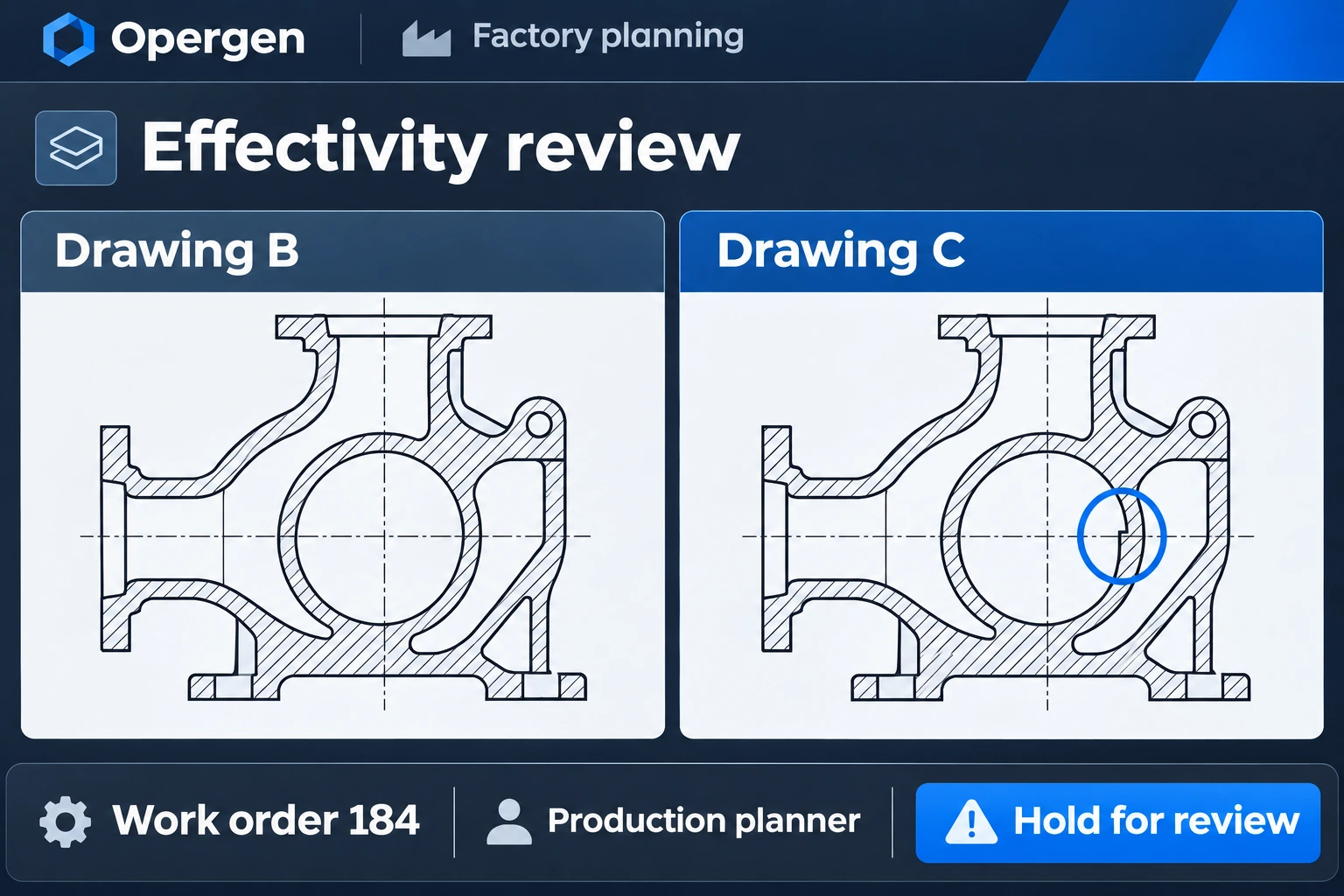
Effectivity review showing drawings B and C side by side and work order 184 held for review.
Hold order 184 until engineering confirms when revision C takes effect.
  1. Open the change

    The coordinator selects the flagged housing and checks the approval notice for the effective date or serial range.

  2. Check the open order

    The planner compares its build date, allocated stock and installed revision. A released drawing can still be too new for this order.

  3. Record the disposition

    If revision B remains applicable, retain it with the reason. If C applies, secure approval and issue the revised work instruction.

What moves forward Once engineering confirms applicability, planning can issue the correct revision. Quality retains any approved deviation with the job.

Plan the first working session

Interview the change coordinator and production planner

Choose a component revision introduced while orders were open. Does it apply by serial number, build order or date, and which stock was already committed?

What the team takes away

An affected-order register names the governing revision and release basis, distinguishing existing commitments from orders the planner should update.

Establish the approved version

Read the approved change notice, released BOM revisions, open production orders and inventory allocations. Retain the approved effectivity rule and any deviation permits.

Where the boundary moves

An order opened before the change contains units on both sides of the serial cutoff. Selecting the BOM solely by order creation date can incorrectly apply one revision to all units.

Resolve applicability

  1. Identify part revisions touched by the approved change.
  2. Compare each open order with the effectivity boundary.
  3. Prepare an affected-order list with shortages, deviations and old stock reserved.

Validate the first change

Replay a change that crossed open orders and include one approved deviation. Confirm order-level and serial-level results before the planning team uses the list during a change meeting.

Measure correction and rework

Measure order corrections after change release, time to locate affected material and instances where the wrong revision reached kitting. Track unused stock separately from production rework.

Bring us a workflow you want to improve

Request a call
Search Opergens

Help us diagnose your issue

Which industry are you in?
How large is your organisation?
What slows you down most?
What would a better working day look like?