
Plan the first working session
Interview the billing partner and invoicing specialist
Find an entry challenged under a client’s billing guidelines. Was the issue the task code, the staffing level or the wording, and who approved the remedy?
What the team takes away
A pre-bill review sheet links challenged entries to the relevant client guideline and the billing partner’s disposition before the invoice is issued.
Establish the approved version
Use the signed engagement terms, the client’s dated billing guidelines, time entries and approved rate schedule. Link every warning to the operative document and specific entry.
Where the boundary moves
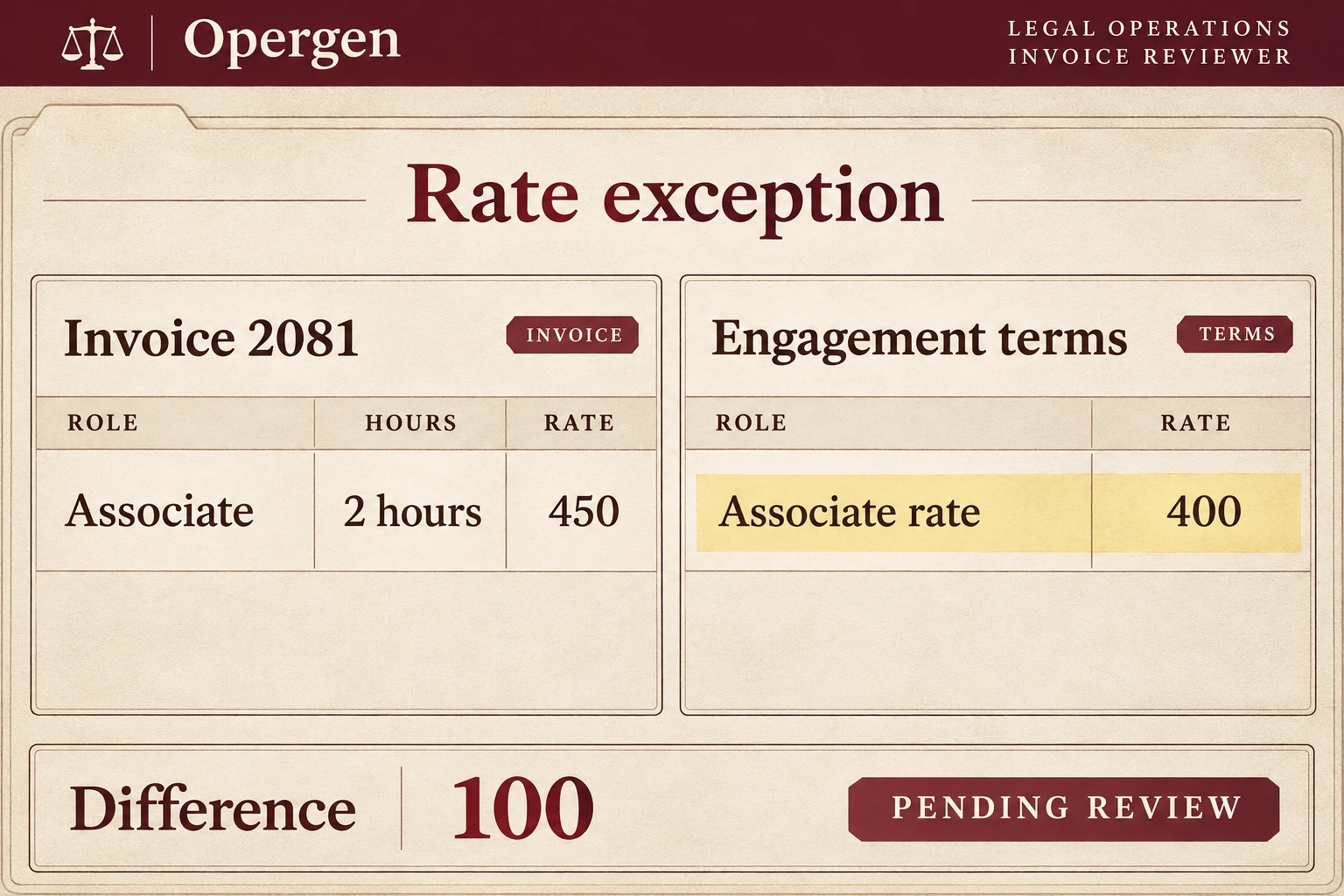
A rate increase is approved for work after a specific date but the invoice spans two months. Applying a single schedule to all entries would either overbill or understate the fee.
Resolve applicability
- Check matter and billing entity before validating time.
- Compare rate, task code and narrative against the permitted rules.
- Assemble proposed corrections and unresolved interpretations for partner sign-off.
Validate the first change
Pilot with historical draft bills that subsequently received adjustments. Compare the proposed warnings with partner decisions and check that restricted matter narratives stay inside the proper workspace.
Measure correction and rework
Measure billing rejections, reviewer time per draft and over-flagging of acceptable entries. Compare accepted adjustments with the client’s actual rejection reasons.