
Make the decision visible before dinner service
A substitution notice is easy to miss in a buyer’s inbox. A kitchen view can show the affected dishes and the person who needs to review each change. The chef checks the recipe and applicable ingredient information before the front of house receives an updated briefing.
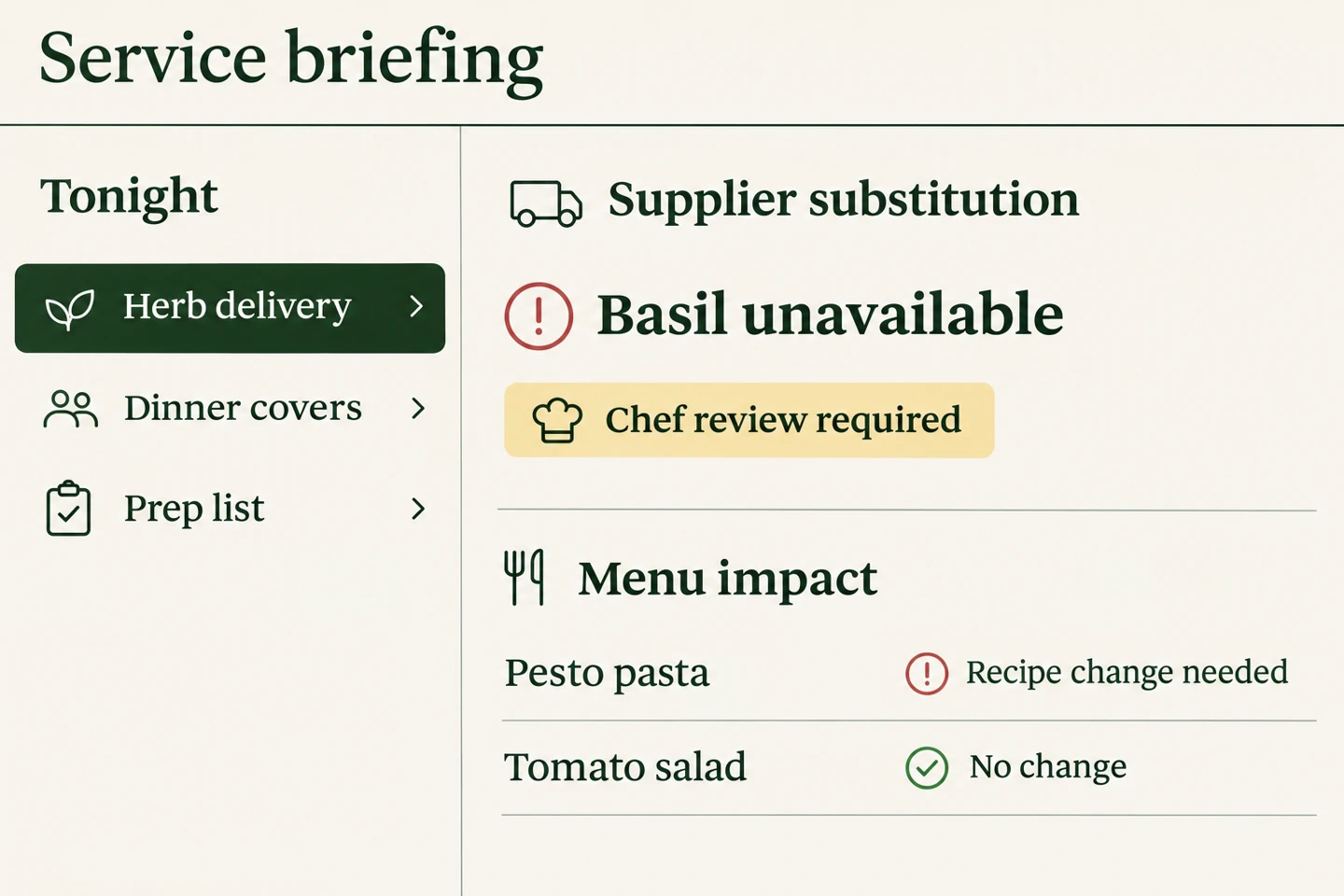
Plan the first working session
Interview the chef and menu publisher
Take the last substitution that reached a venue halfway through service. Which dishes were already prepared, and who checked the new supplier label before the menu changed?
What the team takes away
A service-specific change sheet names the affected recipes, venues and channels. The chef records the decision and the publisher checks off each approved update.
What enters the register
Use the supplier’s replacement specification, approved recipe cards, site menus and current ingredient declarations. Keep the supplier item and recipe version together even when the purchasing description does not change.
Review sequence
- Match the receiving note to the approved ingredient.
- Find recipes and site menus that use that version.
- Prepare a change register with unresolved ingredient declarations and the owner for each menu.
A misleading match
A substitute uses the same product description but comes from another manufacturer. Comparing only the order description would miss an ingredient change. Route missing specifications back to purchasing.
Bring the queue into use
Begin with one site and one supplier category. Have the chef reproduce the candidate recipe list from the purchasing file. Enable draft menu updates only after old and new ingredients can be traced independently.
Measure the exceptions
Measure time from substitution notice to verified menu review. Count affected dishes missed in the first pass and publish-time discrepancies between the printed menu, POS and delivery channel.