
The decision behind the technology
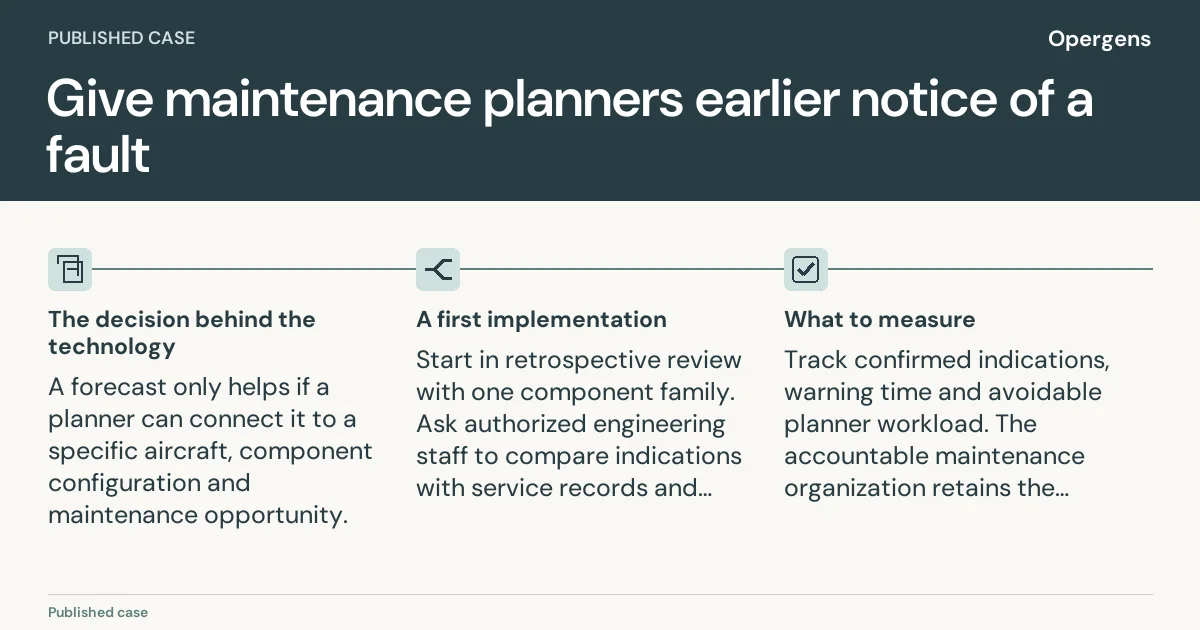
A forecast only helps if a planner can connect it to a specific aircraft, component configuration and maintenance opportunity.
What your team could test first
Start in retrospective review with one component family. Ask authorized engineering staff to compare indications with service records and identify configuration changes that affect interpretation.
What to measure
Track confirmed indications, warning time and avoidable planner workload. The accountable maintenance organization retains the release decision.
What to check in your own operation
Follow one historical fault from the first available indication through the next feasible inspection opportunity. Identify whether an aircraft change, unavailable part or maintenance slot constrained the response. A planner should be able to tell when a new signal would have changed a booking and when the existing process would have produced the same decision.
- The decision behind the technology
- A forecast only helps if a planner can connect it to a specific aircraft, component configuration and maintenance opportunity.
- What your team could test first
- Start in retrospective review with one component family. Ask authorized engineering staff to compare indications with service records and identify configuration changes that affect interpretation.
- What to measure
- Track confirmed indications, warning time and avoidable planner workload. The accountable maintenance organization retains the release decision.