
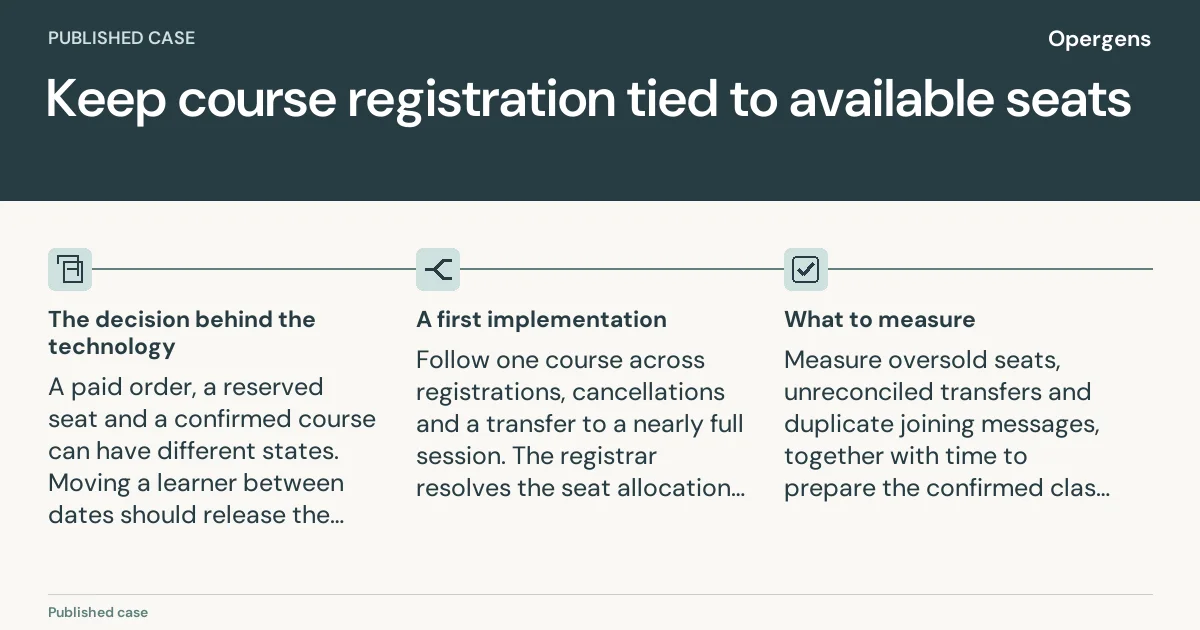
The decision behind the technology
A paid order, a reserved seat and a confirmed course can have different states. Moving a learner between dates should release the original capacity, preserve the payment reference and avoid issuing conflicting joining instructions.
What your team could test first
Follow one course across registrations, cancellations and a transfer to a nearly full session. The registrar resolves the seat allocation and finance determines any adjustment to the original order.
What to measure
Measure oversold seats, unreconciled transfers and duplicate joining messages, together with time to prepare the confirmed class list.
What to check in your own operation
Follow an enrollment that moves between dates after a course reaches capacity. Check whether the original seat, equipment reservation and waitlist position update together. A registrar should be able to resolve the transfer without counting a learner twice. If records disagree, fix the reservation logic before using historical fill rates to forecast demand.
- The decision behind the technology
- A paid order, a reserved seat and a confirmed course can have different states. Moving a learner between dates should release the original capacity, preserve the payment reference and avoid issuing conflicting joining instructions.
- What your team could test first
- Follow one course across registrations, cancellations and a transfer to a nearly full session. The registrar resolves the seat allocation and finance determines any adjustment to the original order.
- What to measure
- Measure oversold seats, unreconciled transfers and duplicate joining messages, together with time to prepare the confirmed class list.