
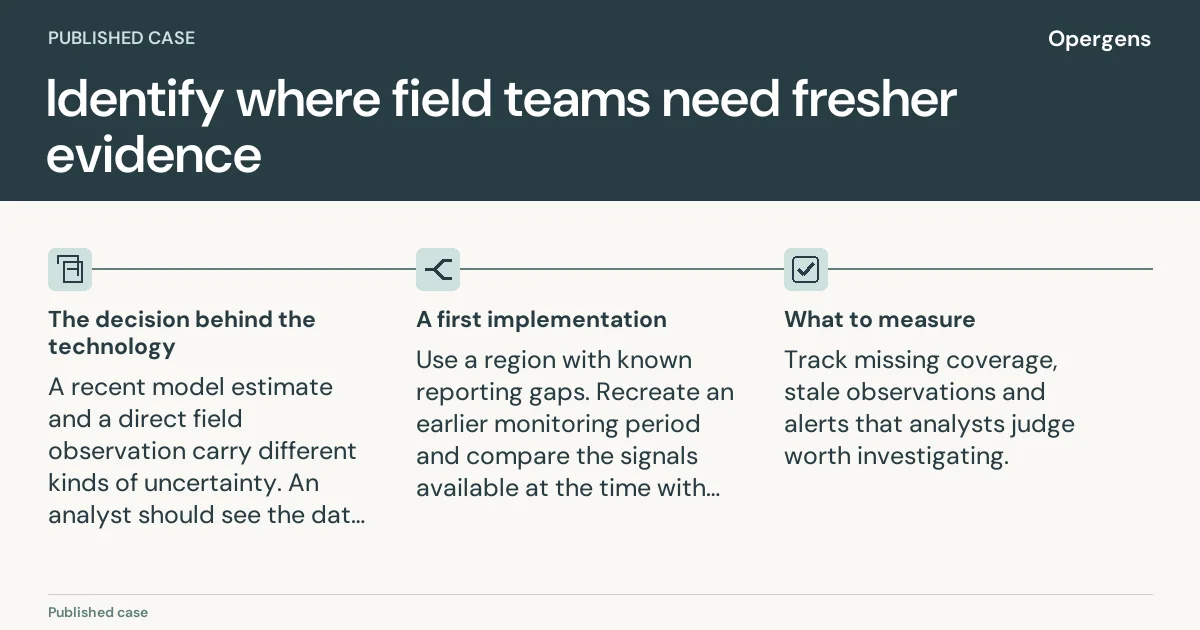
The decision behind the technology
A recent model estimate and a direct field observation carry different kinds of uncertainty. An analyst should see the date and origin of both.
A first implementation
Use a region with known reporting gaps. Recreate an earlier monitoring period and compare the signals available at the time with subsequent verified observations.
What to measure
Track missing coverage, stale observations and alerts that analysts judge worth investigating.
What to investigate locally
Look at a district where responses are sparse and ask the field coordinator which communities the collection method can reach. Check when local staff could verify a change and how they record inconclusive observations. A useful signal should direct a follow-up enquiry and expose its age and coverage before anyone uses it to prioritize resources.
- The decision behind the technology
- A recent model estimate and a direct field observation carry different kinds of uncertainty. An analyst should see the date and origin of both.
- A first implementation
- Use a region with known reporting gaps. Recreate an earlier monitoring period and compare the signals available at the time with subsequent verified observations.
- What to measure
- Track missing coverage, stale observations and alerts that analysts judge worth investigating.