
The operating question
A dashboard and a board pack use the same metric name but different reporting cutoffs. Both totals are internally consistent. Before changing the query, the analyst needs to identify the definition, source snapshot and expected grain.
What we can build
Build a read-only reconciliation view for one recurring metric. Compare the published definition, warehouse inputs, exclusions and time boundaries. Assign unresolved business definitions to the metric owner.
What to test before expanding
Run a period with late-arriving data and a known mapping change. Compare the flagged differences with a reviewed reference. Have a second analyst reproduce the explanation from the same snapshot.
A metric that disagreed with the board pack
- Who we interview
- Ask the report owner and analyst to reproduce both numbers from their original snapshots. Check cancellations, currency, reporting dates and whether the denominator counts customers or transactions.
- What would justify AI?
- Agree on a metric definition and reproducible query first. Retrieval can help staff find the definition and its owner. Generated commentary should refer to the same snapshot as the reported figure.
- What your team receives
- A signed metric definition with the reporting cut-off, source, exclusions and reconciliation steps. The decision log records who can approve a definition change and which reports it affects.
Define review ownership.
Agree which role reviews the output, where it finds authoritative evidence and who resolves an exception. Early operating feedback helps the department owner identify gaps in policy, data or interface design.
Explore the workshop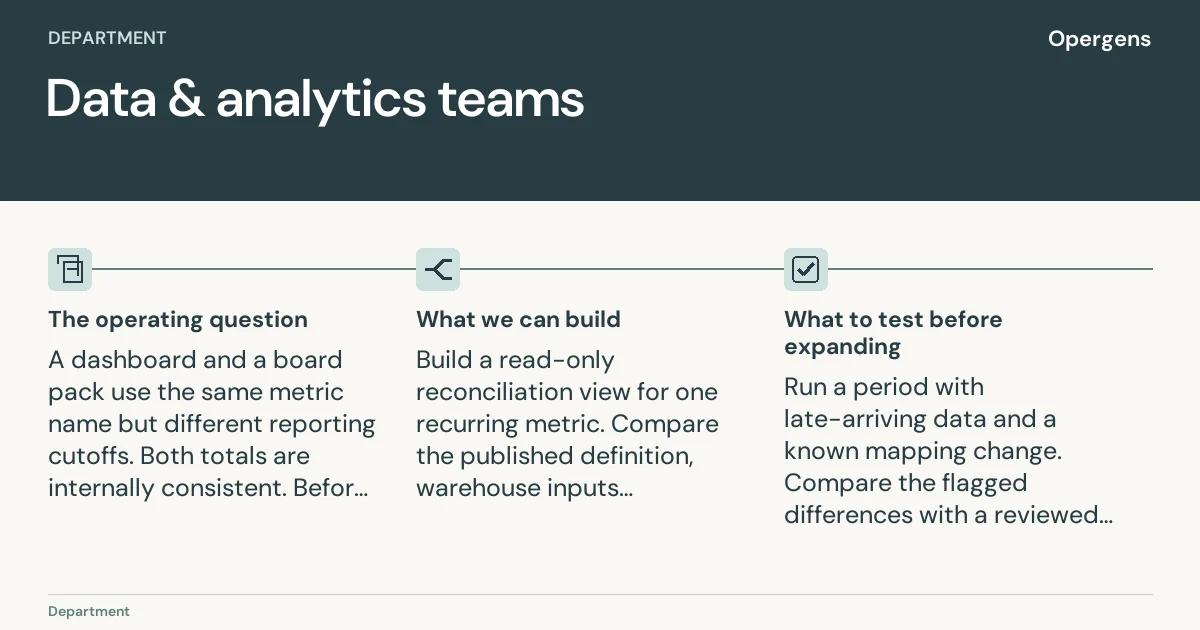
- The operating question
- A dashboard and a board pack use the same metric name but different reporting cutoffs. Both totals are internally consistent. Before changing the query, the analyst needs to identify the definition, source snapshot and expected grain.
- What we can build
- Build a read-only reconciliation view for one recurring metric. Compare the published definition, warehouse inputs, exclusions and time boundaries. Assign unresolved business definitions to the metric owner.
- What to test before expanding
- Run a period with late-arriving data and a known mapping change. Compare the flagged differences with a reviewed reference. Have a second analyst reproduce the explanation from the same snapshot.