
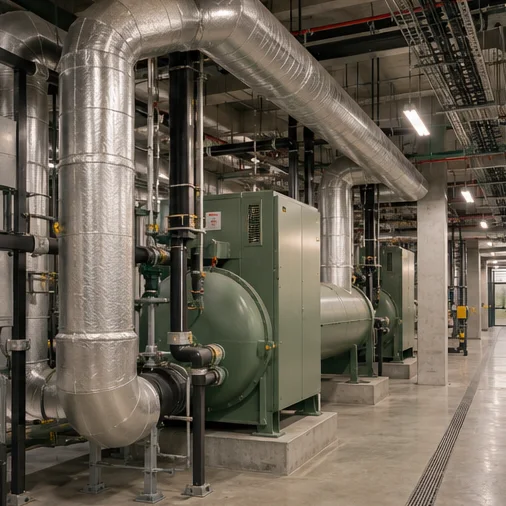
Room identity
Location names repeat across buildings
What Opergens would build
Resolve incoming tickets against site, floor, room and asset identifiers. A dispatcher receives possible matches and confirms the correct asset before assignment.
Which asset should receive the work order?
- Ticket FM81 says “plant room 2” in Tower A
- Asset register has PR2-A and PR2-B in different towers
Propose PR2-A and leave dispatch pending confirmation of the tower and asset tag.
Warranty owner
Warranty work goes to the wrong vendor
What Opergens would build
Compare service dates and installed asset details with warranty terms. The contract owner checks entitlement before dispatching a paid call-out.
Who receives a motor warranty request?
- Air handler AH8 has motor warranty W31 with Vendor A
- The service directory lists Vendor B for routine AH8 maintenance
Route the evidence to Vendor A for warranty review and hold a paid Vendor B callout pending disposition.
Planning the implementation
Which tickets would be assigned differently if the dispatcher knew the installed asset and its warranty?
- Where work gets stuck
- An occupant supplies a room name, while vendor coverage and maintenance history attach to an asset identifier.
- Implementation choice
- Prefer a native service catalog when location and asset records are complete. Add assisted lookup when different occupier names describe the same space.
- What your team receives
- A dispatch specification connecting tenant language, asset tags, coverage boundaries and exception queues.
Triage maintenance requests
A tenant reports cooling problems in a meeting room. Match the room to a building and asset record, collect open tickets affecting the same zone and propose the appropriate maintenance queue.
Maintenance dispatch
Open- Building
- West Campus
- Room
- Meeting 204
- Asset match
- Two candidates
- Service tickets
- Asset registers
- Vendor schedules
A dispatcher confirms urgency and assigns the job.
Include renamed rooms, duplicate reports from nearby occupants and faults under an active vendor warranty. Measure reassignment and check whether the queue preserves existing emergency escalation procedures.
The working record
The working records include service tickets, asset registers and vendor schedules. A dispatcher confirms urgency and assigns the job. A useful first artifact is a reviewed example with the source beside each finding. It gives the business owner a concrete way to mark information that is missing, out of date or assigned to the wrong record.
Which revision is current on site?
Inspect a real package of transmittals, amendments or asset updates with the responsible lead. Map site identifiers and document status before picking a tool. A connector that preserves revision history may solve more of the problem than a model that summarizes the latest folder. Test both approaches against a package that changed during review.
Systems and integration
A typical scope spans maintenance management, help desk and asset register. Start with a restricted reporting view or an approved export. Keep the source record identifier, version and observation time in the review interface. Agree how late changes are surfaced and which source is authoritative when identifiers disagree.
One possible platform setup
If maintenance requests arrive in ServiceNow or Zendesk, match each ticket to a controlled asset register. Keep the service system’s ticket ID on every proposed reassignment.
What to test in a pilot
Include renamed rooms, duplicate reports from nearby occupants and faults under an active vendor warranty. Measure reassignment and check whether the queue preserves existing emergency escalation procedures. The primary measure is work orders requiring reassignment. Evaluate the current process and the pilot against the same files, and record the cases on which experienced reviewers disagree.
Production and handover
Write the approved work order into the maintenance system and keep the requestor’s source description. A dispatcher should be able to undo a duplicate grouping without deleting either original report.
Other workflows we can develop
Planned maintenance summaries
Combine service dates, manufacturer schedules and open jobs into a planned-maintenance review. The scheduler checks asset availability and confirms priorities with the site lead.
Vendor work verification
Compare vendor completion notes with the work order and site acceptance record. A facilities supervisor resolves incomplete evidence before a work order is closed.
Published industry cases
Search across the systems behind a property
AWS and CBRE describe a property management assistant that brings information from separate systems into a shared search experience. The technical account explains the retrieval and application layers.
