
Controlled change review
- Previous clause: section 4, quarterly check
- Proposed clause: section 6, monthly check
- Change type: interval plus relocation
- Reviewer: quality owner
- Release decision: pending confirmation of the new interval
Inspect the review notes
Provide an evidence trail even when the reviewer rejects a suggested difference. This makes it possible to distinguish a deliberate policy choice from a comparison failure. Retain the source edition and the proposed edition beside the sign-off so later revisions cannot alter the record.
How the work moves
Follow the operating sequence
Gather the evidence
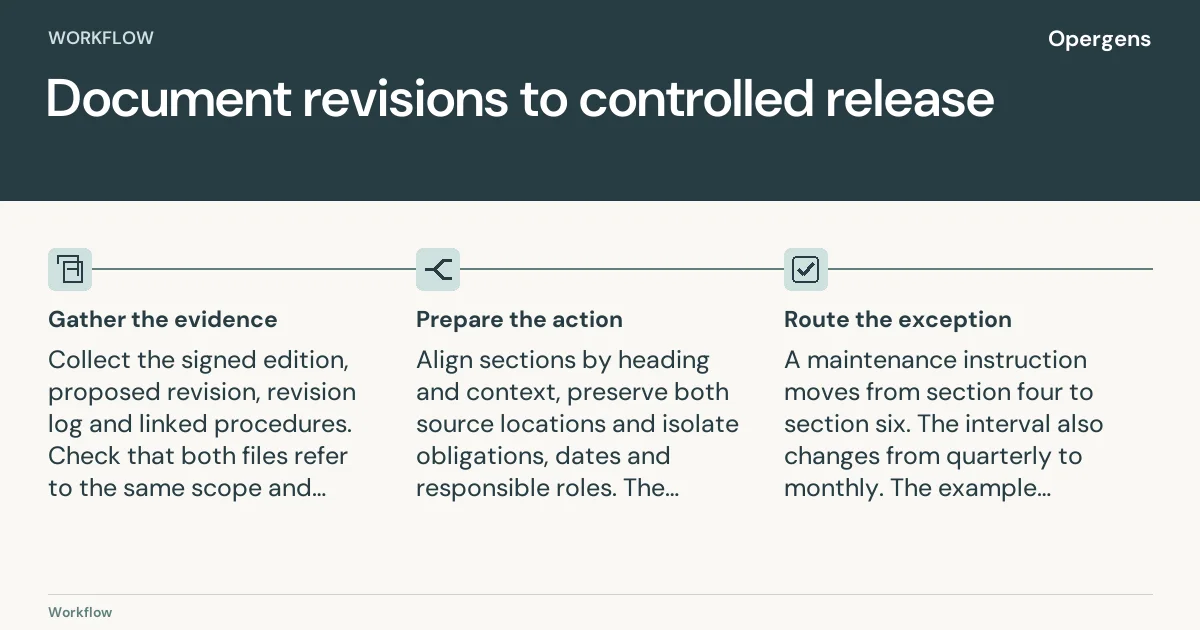
Collect the signed edition, proposed revision, revision log and linked procedures. Check that both files refer to the same scope and language. A layout change or a renumbered clause can create a misleading apparent change if the system relies entirely on page position.
Prepare the action
Align sections by heading and context, preserve both source locations and isolate obligations, dates and responsible roles. The document owner reviews substantive differences and can mark an editorial correction. Keep an approval record tied to the reviewed file versions.
Route the exception
A maintenance instruction moves from section four to section six. The interval also changes from quarterly to monthly. The example comparison suppresses the false deletion caused by the move and highlights the interval change for the authorized process owner.
Compare a complete record with an exception
Source and permissions
Collect the signed edition, proposed revision, revision log and linked procedures. Check that both files refer to the same scope and language. A layout change or a renumbered clause can create a misleading apparent change if the system relies entirely on page position.
Exception to rehearse
A maintenance instruction moves from section four to section six. The interval also changes from quarterly to monthly. The example comparison suppresses the false deletion caused by the move and highlights the interval change for the authorized process owner.
Test the workflow on real operating conditions
Include scanned edits, a renamed appendix and mixed-language versions. Review omitted material changes as well as spurious markup. A signed pack should reproduce precisely which versions were compared when a new draft arrives the following day.
Build the test set around the consequences of an error. A cosmetic formatting mistake and an omitted approval requirement deserve different handling. Keep evaluation examples separate from development examples and use a documented adjudication process when reviewers disagree.
Agree who takes ownership
What Opergens delivers
A review rubric, versioned test set, escalation policy and release record tied to named owners.
What the operator verifies
A proposed change can be compared against the current release using the same examples and criteria.
- Gather the evidence
- Collect the signed edition, proposed revision, revision log and linked procedures. Check that both files refer to the same scope and language. A layout change or a renumbered clause can create a misleading apparent change if the system relies entirely on page position.
- Prepare the action
- Align sections by heading and context, preserve both source locations and isolate obligations, dates and responsible roles. The document owner reviews substantive differences and can mark an editorial correction. Keep an approval record tied to the reviewed file versions.
- Route the exception
- A maintenance instruction moves from section four to section six. The interval also changes from quarterly to monthly. The example comparison suppresses the false deletion caused by the move and highlights the interval change for the authorized process owner.