
Retail channel bridge
- Sell-in: twelve cases
- Sell-through: eight cases
- Unreconciled channel stock movement: four cases
- Review items: opening inventory, transfers and returns
- Next allocation: pending category review
Inspect the review notes
Use consistent equivalent units before comparing retailers. A carton, a multipack and an individual unit can each be reported as one sale. An unexplained pack-size change can look like a major improvement in demand.
How the work moves
Follow the operating sequence
Gather the evidence
Align sell-in to retailers, consumer sell-through, promotional dates, pack sizes, discounts, returns, trade terms and distributor stock. Distinguish unit size and the currency and period for each source. A shipment into a retailer is a different event from a consumer purchase at the till.
Prepare the action
Build a channel margin bridge and show which changes reflect volume, price, mix, trade spend or timing. Compare similar stores and check the period after the promotion for demand pulled forward. A category manager and finance owner review assumptions before approving the next allocation.
Route the exception
A distributor orders twelve cases ahead of a display promotion, while tills show only eight cases sold in the same period. Channel inventory rises by four cases before returns or transfers. The review keeps that stock separate from consumer demand and asks the team to check the next replenishment cycle.
Compare a complete record with an exception
Source and permissions
Align sell-in to retailers, consumer sell-through, promotional dates, pack sizes, discounts, returns, trade terms and distributor stock. Distinguish unit size and the currency and period for each source. A shipment into a retailer is a different event from a consumer purchase at the till.
Exception to rehearse
A distributor orders twelve cases ahead of a display promotion, while tills show only eight cases sold in the same period. Channel inventory rises by four cases before returns or transfers. The review keeps that stock separate from consumer demand and asks the team to check the next replenishment cycle.
Test the workflow on real operating conditions
Replay a pack-size change, late retailer claims and a promotion that overlaps a holiday. Compare incremental gross profit, remaining channel stock and post-promotion returns. Surface uncertainty when store coverage or the comparison baseline is incomplete.
A promotion scheduled before a busy holiday may coincide with demand that would have arrived anyway. Inspect the baseline and the comparison group before attributing lift. Track stockouts and substitution, since constrained inventory and displaced sales change the financial result.
Agree who takes ownership
What Opergens delivers
A reviewed margin bridge, scenario model, evidence for the baseline and a trial proposal with agreed guardrails for price changes and customer treatment.
What the operator verifies
A pricing owner can explain the assumptions, inspect a sensitivity range and authorize or decline a trial. The review compares observed contribution with the agreed baseline and measures displacement of adjacent sales.
- Gather the evidence
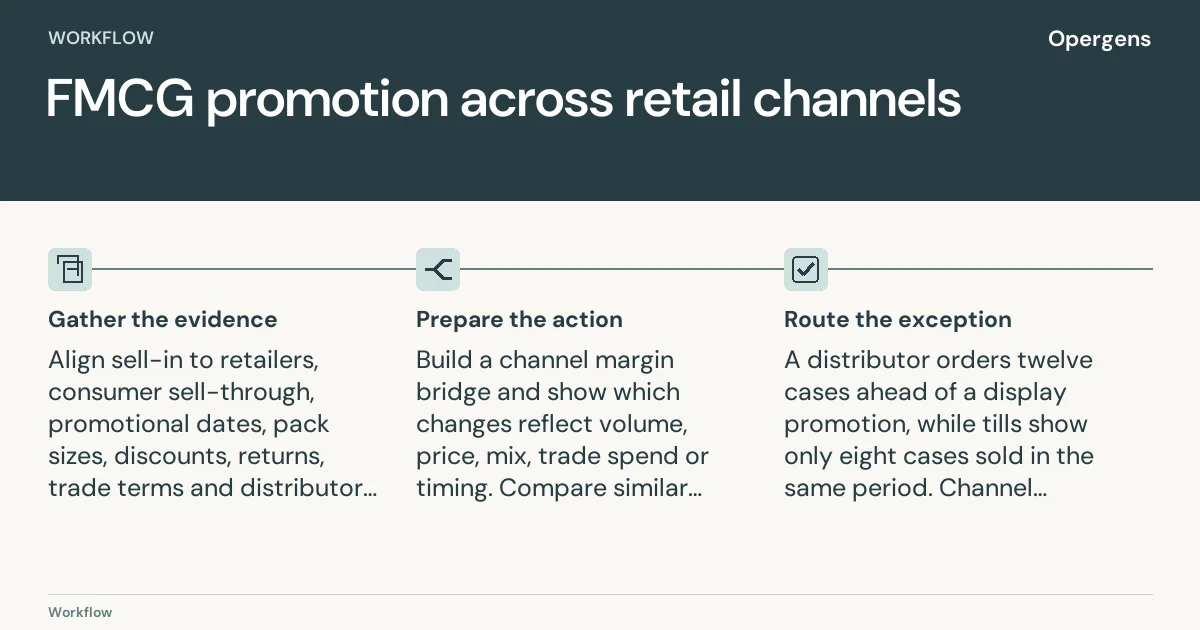
- Align sell-in to retailers, consumer sell-through, promotional dates, pack sizes, discounts, returns, trade terms and distributor stock. Distinguish unit size and the currency and period for each source. A shipment into a retailer is a different event from a consumer purchase at the till.
- Prepare the action
- Build a channel margin bridge and show which changes reflect volume, price, mix, trade spend or timing. Compare similar stores and check the period after the promotion for demand pulled forward. A category manager and finance owner review assumptions before approving the next allocation.
- Route the exception
- A distributor orders twelve cases ahead of a display promotion, while tills show only eight cases sold in the same period. Channel inventory rises by four cases before returns or transfers. The review keeps that stock separate from consumer demand and asks the team to check the next replenishment cycle.