
Promotion margin bridge
- Standard price: 10
- Unit cost: 7
- Reference volume: 100
- Proposed price: 9
- Forecast volume: 130
- Reference gross profit: 300
- Promotional gross profit: 260
- Decision: inspect funding and displaced demand before approval
Inspect the review notes
At a contribution of two per discounted unit, 150 units would be needed to recover the reference gross profit of 300 before any additional campaign cost. Ask the merchant which assumptions can be tested and where a stock limit would make the proposed volume impossible.
How the work moves
Follow the operating sequence
Gather the evidence
Obtain the selling price actually paid, units, landed cost, supplier funding, returns, stockouts and overlapping promotions. Record which stores and weeks qualify for a defensible comparison. Exclude future corrections that a merchant could not have known at the decision date.
Prepare the action
Estimate the likely baseline without the campaign. Show unit lift, margin per unit and possible substitution from adjacent products. Present a range under different assumptions. The category owner reviews cannibalization and supply constraints before approving any price or promotion.
Route the exception
At 10 currency units and a unit cost of 7, one hundred units produce 300 gross profit. At a price of 9, selling 130 units produces 260 before other campaign costs. At those volumes, revenue rises and gross profit falls.
Compare a complete record with an exception
Source and permissions
Obtain the selling price actually paid, units, landed cost, supplier funding, returns, stockouts and overlapping promotions. Record which stores and weeks qualify for a defensible comparison. Exclude future corrections that a merchant could not have known at the decision date.
Exception to rehearse
At 10 currency units and a unit cost of 7, one hundred units produce 300 gross profit. At a price of 9, selling 130 units produces 260 before other campaign costs. At those volumes, revenue rises and gross profit falls.
Test the workflow on real operating conditions
Use comparable stores or an agreed trial design. Follow returns, pull-forward and post-promotion demand over a suitable window. Keep recommendations within the merchant's approved price policy and record the reviewer, assumptions and final decision.
A promotion scheduled before a busy holiday may coincide with demand that would have arrived anyway. Inspect the baseline and the comparison group before attributing lift. Track stockouts and substitution, since constrained inventory and displaced sales change the financial result.
Agree who takes ownership
What Opergens delivers
A reviewed margin bridge, scenario model, evidence for the baseline and a trial proposal with agreed guardrails for price changes and customer treatment.
What the operator verifies
A pricing owner can explain the assumptions, inspect a sensitivity range and authorize or decline a trial. The review compares observed contribution with the agreed baseline and measures displacement of adjacent sales.
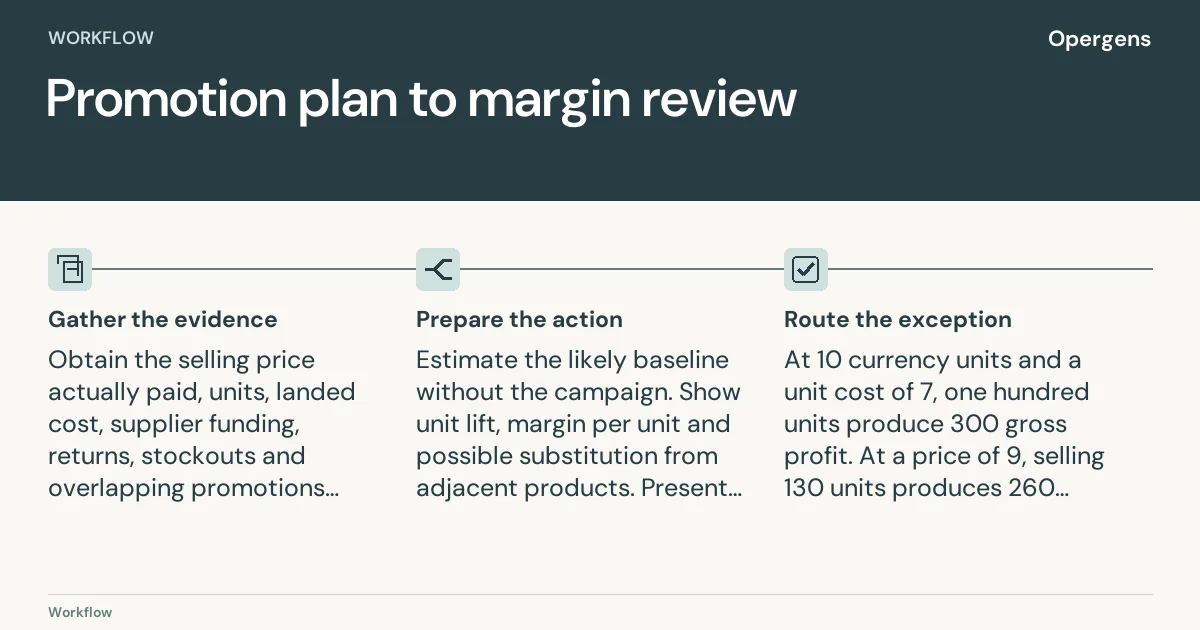
- Gather the evidence
- Obtain the selling price actually paid, units, landed cost, supplier funding, returns, stockouts and overlapping promotions. Record which stores and weeks qualify for a defensible comparison. Exclude future corrections that a merchant could not have known at the decision date.
- Prepare the action
- Estimate the likely baseline without the campaign. Show unit lift, margin per unit and possible substitution from adjacent products. Present a range under different assumptions. The category owner reviews cannibalization and supply constraints before approving any price or promotion.
- Route the exception
- At 10 currency units and a unit cost of 7, one hundred units produce 300 gross profit. At a price of 9, selling 130 units produces 260 before other campaign costs. At those volumes, revenue rises and gross profit falls.