
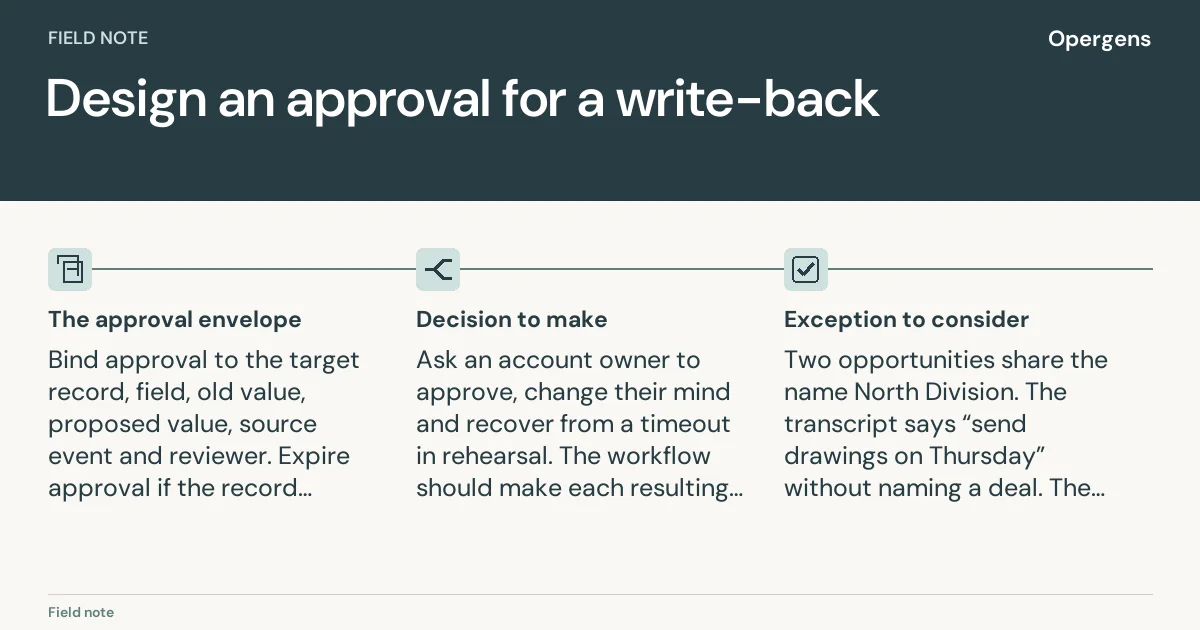
The approval envelope
Bind approval to the target record, field, old value, proposed value, source event and reviewer. Expire approval if the record changes materially or the actor loses permission. Store a durable identifier so a delivery retry cannot apply the same update twice.
Decision to make
Ask an account owner to approve, change their mind and recover from a timeout in rehearsal. The workflow should make each resulting CRM state visible to the person responsible for the customer.
Exception to consider
Two opportunities share the name North Division. The transcript says “send drawings on Thursday” without naming a deal. The draft retains that commitment, leaves the opportunity unresolved and lets the owner pick the renewal or dismiss the suggestion.
Use this guide
Inspect a completed decision record
Opportunity change request
- Source record: approved call A-17
- Two open opportunities have the same account
- Proposed next step: send drawings on Thursday
- Opportunity and date: awaiting owner confirmation
- CRM write: pending
Inspect the review notes
Match customer identity, opportunity and field freshness independently. If a customer has several active deals, an accurate transcript can still produce an incorrect update. Preserve a link to the source note so a future account owner can understand why the field changed.
Set up the trial
Collect comparable examples
Start with the activity ID, the opportunity ID, the call note and the field history. An account name alone cannot identify a renewal when the same customer also has an implementation project open. The account owner selects the opportunity and confirms they may update it.
Observe the handoff
Extract commitments with their speakers and dates. Present a before-and-after view of the next-step field. Leave the sales stage under the ordinary CRM change process. After approval, attach the activity reference and read the saved record back. A later edit by another seller sends the draft back for comparison.
Review the evidence
Run an import twice, remove access to one opportunity and edit the field between approval and save. Inspect the CRM history after each run. Track incorrect record associations alongside the minutes spent typing and verifying each update.
Adapt the scope to your organization
Start with one team
Connect one source and one reviewed destination field. Start with an export if the target account has no API entitlement.
Extend across teams
Use separate service identities for environments and teams. Rehearse simultaneous updates, permission removal and recovery across version changes.
- The approval envelope
- Bind approval to the target record, field, old value, proposed value, source event and reviewer. Expire approval if the record changes materially or the actor loses permission. Store a durable identifier so a delivery retry cannot apply the same update twice.
- Decision to make
- Ask an account owner to approve, change their mind and recover from a timeout in rehearsal. The workflow should make each resulting CRM state visible to the person responsible for the customer.
- Exception to consider
- Two opportunities share the name North Division. The transcript says “send drawings on Thursday” without naming a deal. The draft retains that commitment, leaves the opportunity unresolved and lets the owner pick the renewal or dismiss the suggestion.