
Opergens
Scenario analysis

Simulation and digital twins

Explore what could happen before changing a schedule or physical process.

Inside the workflow.

Business question

A plant planner wants to compare a new shift pattern with the existing line schedule. The useful question is how queues, changeovers and available staff interact when demand changes.

Required input

A process map, calibrated durations, capacity constraints and verified operating assumptions.

Working output

Comparable scenarios showing expected bottlenecks, sensitivity and unresolved assumptions.

What changes the choice?

An appealing visualization can conceal a model that has never reproduced the current process. Calibrate against observed operation before relying on an alternative.
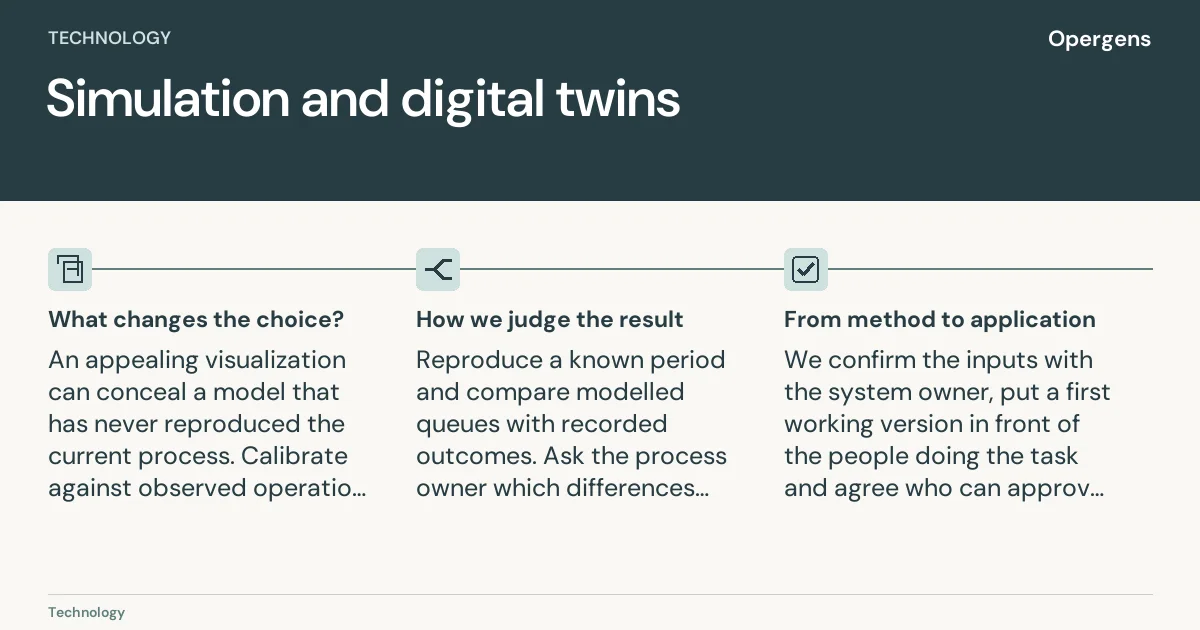
Simulation and digital twins — What changes the choice?: An appealing visualization can conceal a model that has never reproduced the current process. Calibrate against observed operation before relying on an alternative.; How we judge the result: Reproduce a known period and compare modelled queues with recorded outcomes. Ask the process owner which differences invalidate the scenario.; From method to application: We confirm the inputs with the system owner, put a first working version in front of the people doing the task and agree who can approve changes. Production introduces monitoring, recovery and training for the team taking ownership.
Simulation and digital twins
What changes the choice?
An appealing visualization can conceal a model that has never reproduced the current process. Calibrate against observed operation before relying on an alternative.
How we judge the result
Reproduce a known period and compare modelled queues with recorded outcomes. Ask the process owner which differences invalidate the scenario.
From method to application
We confirm the inputs with the system owner, put a first working version in front of the people doing the task and agree who can approve changes. Production introduces monitoring, recovery and training for the team taking ownership.

How we judge the result

Reproduce a known period and compare modelled queues with recorded outcomes. Ask the process owner which differences invalidate the scenario.

From method to application

We confirm the inputs with the system owner, put a first working version in front of the people doing the task and agree who can approve changes. Production introduces monitoring, recovery and training for the team taking ownership.

When this method earns its place

Define the operational decision before choosing the model’s level of detail. A queueing comparison may need calibrated durations and capacities without a detailed visual replica.

Evidence to review before expanding

Reproduce one known congested period and one quiet period. Ask the operator which unexplained differences make the model unsuitable for the proposed change.

Bring us a workflow you want to improve

Request a call
Search Opergens

Help us diagnose your issue

Which industry are you in?
How large is your organisation?
What slows you down most?
What would a better working day look like?